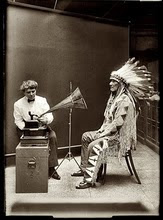
Andrew Sullivan of The Atlantic (which has a spiffy new makeover) tells us...
Why I Blog
"...the key to understanding a blog is to realize that it’s a broadcast, not a publication. If it stops moving, it dies. If it stops paddling, it sinks."
Point taken, reader.
Monday, October 20, 2008


Links of the Day: October 20
Why the American appeal of the road hog displays contradictory individualism and conformity--speaking of which, despite political orientation or societal relation to the white colonial power structure, we're all postmodernists now, so keep on reading the written medium de jure of the deconstructed world we hath wrought: the blog .
Monday, September 15, 2008
I only play analog, dude...
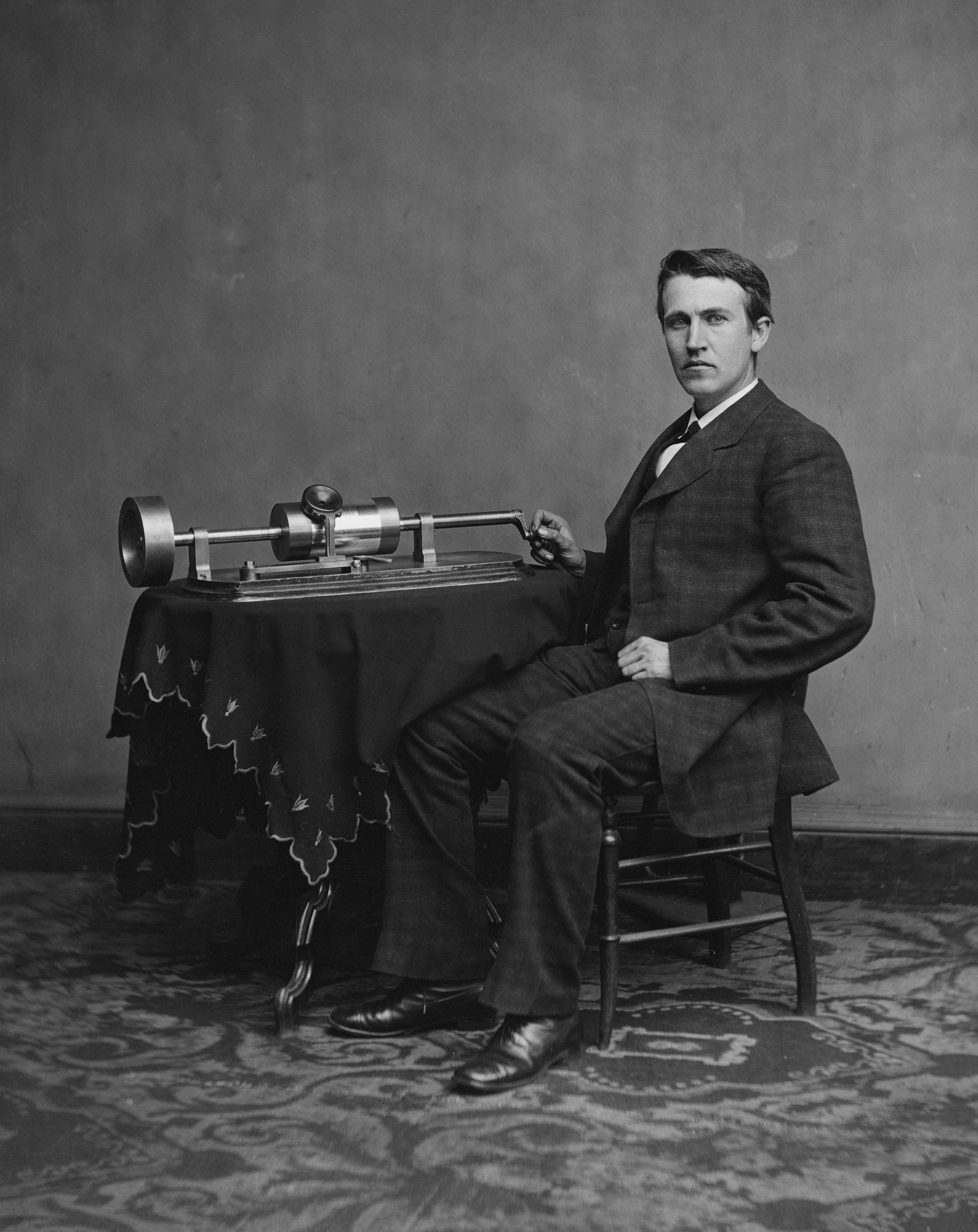
From the ongoing "Hey dude, check out this link" email correspondence between Mr. Geoff Greene and Sheikh Khalil Hibri...
- - -
The link of the day today was an interesting aside in The Wall Street Journal (hidden under the apocalyptic Fall of the House of Lehman Brothers headlines) about the surprising jump in vinyl LP sales of late:
http://online.wsj.com/article/
It's disappointing to me, however, that they didn't bother to explicate this phenomenon a bit. Older album buyers have been driving the only growth in the industry for years now, sopping up Beatles and Rod Stewart titles as quickly as their blue Viagra pills. Is this a phenomenon of the old?
Or, is this an expression of a new vitality in the DJ business, with the "commodification" of music that the internet has spawned ironically fueling a new curiosity of the existing musical canon and media--and a retrograde desire for authenticity. Would I have learned to love Blondie or Janis Joplin without the internet? Perhaps, but Google and free MP3 downloads allow for a much lazier pursuit of discovery than the old system of album sifting in the dusty backs of offbeat record stores. In the age of the internet, everyone can be an enthusiast, and change their enthusiasms by the week. If this phenomenon is widespread, then the internet utopians are right and the litigation-happy record companies are painfully wrong--the banal proliferation of piracy may be actually sparking consumer interest in legitimately-purchased media, both old and new.
Perhaps even the vision that the article insinuates could be true. That there is a Romantic backlash against the ethereality of digital media. You can't see or touch the zeros and ones encoded on a CD, hard drive, iPod, or internet server. Even the fast-dying CD is not as much of a fetish object as the vinyl record, with its physical groves lending a satisfying causality to the medium (the hand-crank gramophone is the ultimate expression of this elegant causality of form and function--the flow of the needle bobbing over the undulating sea of groves, singing out through the honeysuckle-flower of the amplifying horn). Why else would people be turning out in ever greater numbers to spend $30 (or $3000) to see their artists performs live (even when "live" means lip-synching or pressing "enter" on the stage laptop)? This could be the musical equivalent of the "Whole Foods" phenomenon, the luxury status of "natural fiber" clothing, "green" household products, and the long and surprising endurance of bibliophilia in the wake of ebooks and Kindle.
We're all grasping for authenticity, for the dirt-in-your-fingernails Reality our ancestors supposedly enjoyed. The alienation from our world has gotten so bad that even copies of Reality, the mere simulacra of a vital primary exposure to life, strike us as relatively authentic and true. Compared to the HD-broadcast ersatz, the hyperreal Spectacle, the celebrity-cult Kabuki theater that is 21st-Century modernity, it certainly is.
If analog is only a copy, then at least it is the Master Copy. The analog LP is the signed first edition to digital's mass market paperback. Once it is stripped into a naked stream of zeros and ones, its tarnished by cheap and easy proliferation. The virgin is deflowered and reduced to a two-minute cumshot on YouPorn. Everyone booger-eating hack can have the new Radiohead album, downloading it literally for free from the comfort of their mother's basement. But, only the choice elect will have the enthusiast's $80 edition...
Which all makes me absolutely certain that I've been missing out on valuable cool points by not placing a gramaphone next to my Royal 10 typewriter, antebellum loveseat, and 100% organic kitchen. For shame!
P.S. I would suggest that the folks at Stuff White People Like add music-nerd record collecting to their anthropological findings...
Tuesday, June 10, 2008
American married couples try to bring sexy back...

"Quiet, dear, the kids will hear us..."
If you are American, and are to get married, it is your statistical destiny to have sex with your spouse only about once a week (every 5.5 days, to be precise).
If you are a hormone-drunk 18-year-old newlywed, your average is marginally better (every four-and-a-half days).
Why not make a New Year's resolution to get down with your (worse) half every day for the next year?
These couples did.
Oranges 2.0
Sorry for the long delay in blogging, folks, but Greene Futures will be online regularly henceforth...I promise.

Cezanne's "Pommes et oranges" (1899) -- Fast food?
From Harper's Weekly (a very entertaining email digest produced by Harper's magazine):
"For the third year in a row, the consumption of oranges in Britain declined because people were too busy to peel the rind off the fruit."
Geoff Greene's Genius Idea No. 83:
Develop GM oranges who's peels come off as easily as those of a tangerine. Because--admit it-- oranges are a pain to peel for we people on the go. This could do for oranges what Yoplait's Go-GURT did for yogurt...

Cezanne's "Pommes et oranges" (1899) -- Fast food?
From Harper's Weekly (a very entertaining email digest produced by Harper's magazine):
"For the third year in a row, the consumption of oranges in Britain declined because people were too busy to peel the rind off the fruit."
Geoff Greene's Genius Idea No. 83:
Develop GM oranges who's peels come off as easily as those of a tangerine. Because--admit it-- oranges are a pain to peel for we people on the go. This could do for oranges what Yoplait's Go-GURT did for yogurt...
Friday, April 11, 2008
Wireless Tribalism
A few days ago, I encountered Philip Carl Salzman's new book, Culture and Conflict in the Middle East, in which he asserts convincingly that it is tribalism, and not Islam, which is the primary determinate of the modern society and culture of the Middle East. Serendipitous then that from the newest issue of the The Economist comes the suggestion of a return to tribalism for all of us. This neo-tribalism will not be laced together through bonds of blood, but rather through wireless networks.

"My TomTom says veer left, camel!
As the article notes, the "car was not just a faster horse," and indeed the advent of the wireless phone, laptop (and toaster) are not just speedier editions of the same. That the wireless world is a "revolution" is cliched through use and familiarity, so that we have forgotten just how strange it is to be able to walk down the streets of DC chatting to a friend in Paris. Or how revolutionary it is to be able to tap a few commands into the touch screen of your iPhone to Google a restaurant review, book a reservation, and then MapQuest your way there.
Culturally, the wireless revolution has reversed many of the fruits of the automobile revolution. Whereas the car--and the suburb--separated the temporal spaces of "work" and "home," wireless technology has squashed them together again. Don't believe it? Try to go on vacation without checking your email.

"God, this Blackberry outage is killing me..."
The ability to access people and information everywhere gives you more freedom, but also imposes a sort of slavery. A slavery I've alluded to with the "Facebook Panopticon" here earlier. There is no excuse now not to constantly be within email and mobile phone contact. Not answering your phone is now an intentional act, with social repercussions. Organizations--colleges, businesses, and even governments--consider email a legal form of communication, and are increasingly under a de facto requirement that you check your email daily, if not hourly. Again, failure to respond is intentional and has social, and even legal, repercussions.
This is the slavery of constant connectivity. Like a Brittany fleeing from the paparazzi, you can never escape the surveillance of friends, family, coworkers, bosses, and even strangers. You are now a member of a wireless tribe. Not rooted in clan or space, but tied inextricably to each other the world over.
Like all tribes, it imposes upon its members rigid standards and mores of behavior and identity. One wireless misstep: one accidentally forwarded email, unanswered text message or phone faux paux can reverberate throughout the clan, causing gossip, heartbreak, unrest, war and exile.
Think you've fooled your boss by taking out sick? Thanks to your cell phone's GPS, he knows you were at the golf course instead. Maybe you'll think twice before you take your mistress out to dinner when there are thousands of citizen journalists armed with cell phone cameras. Or perhaps you'd better password protect your wireless network at home, before a sidewalk dweller leeches that sex tape from your hard drive. Only a matter of time before those little RFID chips gain access to your very thoughts...


"My TomTom says veer left, camel!
As the article notes, the "car was not just a faster horse," and indeed the advent of the wireless phone, laptop (and toaster) are not just speedier editions of the same. That the wireless world is a "revolution" is cliched through use and familiarity, so that we have forgotten just how strange it is to be able to walk down the streets of DC chatting to a friend in Paris. Or how revolutionary it is to be able to tap a few commands into the touch screen of your iPhone to Google a restaurant review, book a reservation, and then MapQuest your way there.
Culturally, the wireless revolution has reversed many of the fruits of the automobile revolution. Whereas the car--and the suburb--separated the temporal spaces of "work" and "home," wireless technology has squashed them together again. Don't believe it? Try to go on vacation without checking your email.

"God, this Blackberry outage is killing me..."
The ability to access people and information everywhere gives you more freedom, but also imposes a sort of slavery. A slavery I've alluded to with the "Facebook Panopticon" here earlier. There is no excuse now not to constantly be within email and mobile phone contact. Not answering your phone is now an intentional act, with social repercussions. Organizations--colleges, businesses, and even governments--consider email a legal form of communication, and are increasingly under a de facto requirement that you check your email daily, if not hourly. Again, failure to respond is intentional and has social, and even legal, repercussions.
This is the slavery of constant connectivity. Like a Brittany fleeing from the paparazzi, you can never escape the surveillance of friends, family, coworkers, bosses, and even strangers. You are now a member of a wireless tribe. Not rooted in clan or space, but tied inextricably to each other the world over.
Like all tribes, it imposes upon its members rigid standards and mores of behavior and identity. One wireless misstep: one accidentally forwarded email, unanswered text message or phone faux paux can reverberate throughout the clan, causing gossip, heartbreak, unrest, war and exile.
Think you've fooled your boss by taking out sick? Thanks to your cell phone's GPS, he knows you were at the golf course instead. Maybe you'll think twice before you take your mistress out to dinner when there are thousands of citizen journalists armed with cell phone cameras. Or perhaps you'd better password protect your wireless network at home, before a sidewalk dweller leeches that sex tape from your hard drive. Only a matter of time before those little RFID chips gain access to your very thoughts...

Monday, March 31, 2008
Go West, Young Man!

Moses and his weary Chosen tromping through the desert toward Canaan, Puritans in moldy ships sailing to the New American Israel, Conestoga-wagoning Homesteaders heading to Oklahoma, Dust Bowl "Oakies" headed further to California--now supplanted alongside the Napa vines by Mexicans and Ecuadorians. To pack up your life onto the back of your donkey or Datsun in search of greener pastures is a story as old as humanity itself. It is how restless and hungry little Homo Sapiens wandered out of Kenya and Ethiopia to colonize every corner of the earth in the first place.

"Darling, the banana harvest has not been kind this year. Time to pack up and head north..."
But yet, economists seem to ignore the phenomenon of migration when computing Gross Domestic Product. Yes, unconstrained labor, like capital, will tend to flow across national boundaries in Ricardian economics. What wages do return to the motherland are considered in the macroeconomic financial account as transfers. However, why does the Cuban cease to be a Cuban once he leaves Cuba? When a large portion of his wages return to Cuba in the form of remittances to family members, when he retains a dominant Cuban identity and culture in exile and when he is connected to home via overlapping layers of telecommunication?
Under the conventional macroeconomic model, a country becomes less developed when its citizens find a better life elsewhere. Why not instead think of migration as development? Why not measure the Gross Domestic Product per natural? Count the children of a nation no matter where they tread. The Internal Revenue Service of the United States does implicitly, at least, by charging expatriate American citizens income tax.
Measuring GDP and GNI per natural instead of per resident is the idea proposed by Michael Clemens and Lant Pritchett at the Center for Global Development in their recently-published paper Income Per Natural: Measuring Development as if People Mattered More Than Places. According to the two economists, "almost 43 million people live in a group of countries whose income per natural collectively is 50 percent higher than GDP per resident."
Over a decade between the mid-1980s and mid-1990s, China pulled 130 million people out of poverty, the largest single leap in human welfare in history. This was achieved almost entirely by allowing migration from the impoverished western interior to the bustling coastline cities. The Chinese diaspora continues to form the backbone of the South East Asian economies (and have for centuries), inextricably linked in a tight, informal network with the Middle Kingdom. Singapore, for example, is majority Chinese, with a Sino-Singaporean population of 3.5 million.

There are currently four times as many Lebanese people outside Lebanon than inside (there are two-and-a-half times as many Lebanese in Brazil, in fact, than in Beirut). Young Arab men from all over the Middle East flock to Saudi Arabia to earn the nest egg required for an apartment, satellite television and marriage. Only 20 percent of the population of the "United Arab Emirate" of Dubai, meanwhile, is Arab (the most common colloquial languages are English, Hindi and Urdu).
It goes without saying that migrant labor in the United States is an essential source of welfare for Hispanics across the Americas. In 2006, Latin America hosted a flow of remittances totaling $63 billion (exceeding the combined total of all Foreign Direct Investment and Overseas Development Assistance to the region). For the communities who depend upon these wire transfers, the industry of their countrymen is certainly a palpable factor in their gross national welfare.
Clemins and Pritchett conclude their paper with an intriguing meditation:
The bottom line: migration is one of the most important sources of poverty reduction for a large portion of the developing world. If economic development is defined as rising human well being, then a residence-neutral measure of well-being emphasizes that crossing international borders is not an alternative to economic development, it is economic development.
Subscribe to:
Posts (Atom)